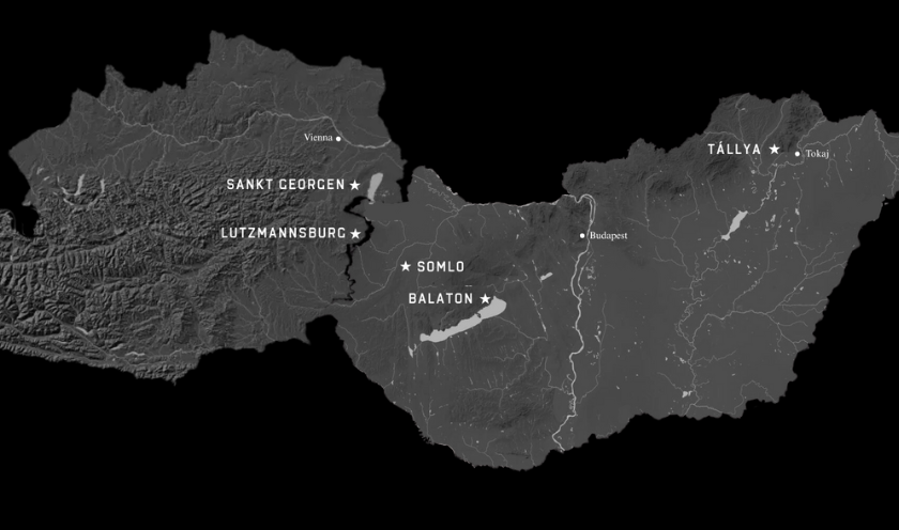
The defender of the Pannonian faith has done it again. It’s 25 years since Roland Velich began revolutionising the reds of Central Europe’s ancient plain. An obsession with the link between origin, identity and majesty—ignited by the wines of Burgundy, Barolo and the Northern Rhône—led Roland to explore the symbolic and sensory resonance of the old Blaufränkisch vines around his Burgenland home. In an era when oak, extract and imitation were the hallmarks of Austria’s rare reds, Roland chose to operate in a different sphere, on another plane. His Blaufränkisch remains a cut above, and he’s still reaching higher with his single-origin Lutzmannsburg bottlings.
For several years, though, a yearning has rumbled away to unite this red yin to a white yang lying across the border. The frontier with Hungary is political; the ties with Tokaj are familial. Remember, Burgenland became an Austrian federal state a fraction over 100 years ago, cobbled together from west Hungarian counties. Across that Pannonian plain, in those distant volcanic hills, lay another sleeping sovereign. The royalty of Tokaj, whose vineyard classification dates back to the 1700s and which was credited with growing the Wine of Kings, King of Wines in the 1800s, is well documented. But its decay behind the Iron Curtain and a strict association with botrytised wines have concealed an important secret: dry Furmint rocks.
Roland sought to bring its greatness to light with a series of Hidden Treasures collaborations. Those who know those wines know they were bloody good. Those important sallies have encouraged Roland to plant another flag. With his partner, Gergö Filep, Roland now farms nine hectares of grand-cru vines in Tokaj, and we’re delighted to announce their Australian debut with the 2024 vintage.
“The nature of wine is culture, and this is a commitment we try to follow,” says Roland, referring to how his Furmint follows the Blaufränkisch model, expressing itself with no winemaking distortion. Both varieties clearly convey their origin and have adapted seamlessly to these remote, very dry, continental conditions. “They’re really brilliant,” he tells us. “They have all this freshness, they have this finesse, they have this lively acidity, and in combination with this different character of the soils. The wines themselves get this full vividness and enjoyable character, which matches so well with food on the one hand, but gives so much pleasure.”
We’re delighted to unveil these 2024s. The range begins with a Furmint/Hárslevelű blend, all honeyed yellow fruit and salty texture, before delving into single-site bottlings named G, T and H for, respectively, the Görbe, Túróska and Hasznos crus. After tasting these wines at Roland’s home, it’s clear that those who love being transported to a rare, far-off place by paradoxical wines of faux-sweetness and shades of savoury, of rocky depths and wells of refreshment, of languor and pep will be glad they wandered into this other realm ruled by Moric maverick, Roland Velich.
Yeast, apple and lemon brightness create a beautifully concentrated core that bursts with freshness but is anchored in substance.
Anne Krebiehl MW, Vinous
The Wines
2024 Moric Furmint/Hárslevelű RRP $59
Two of Tokaj’s most historically significant autochthonous grape varieties—Furmint and Hárslevelű—come together in this harmonious 70/30 blend. Hárslevelű, also known as Lindenblättriger in German and Lipovina in many Slavic countries, contributes delicate floral aromas, while Furmint provides structure and vibrant acidity.
The grapes come from a range of distinctive sites across Tokaj, including old-vine plantings and special vineyard parcels. These include the southernmost point of Tokaj Hill (Teleki Vineyard), the western slopes at Tarcal (Lestár Vineyard), and notable sites in the village of Tállya (Kővágó and Hetény Vineyards).
Tokaj Hill is characterised by volcanic andesite and dacite bedrock, typically covered by thick layers of loess. In Tállya, the bedrock consists primarily of rhyolite tuff and rhyolite. All vineyards are planted on south-, southeast- or west-southwest-facing slopes.
These are old vines, with some planted between the two World Wars and the youngest dating from the 1980s.
The fruit is sourced from vineyards in the villages of Tállya, Tokaj and Tarcal. The vineyards are planted with old vines dating from the 1920s through to the 1980s. The fruit is gently whole-bunch pressed before undergoing spontaneous fermentation. The wine is aged for six months on full lees, followed by a further six months on fine lees in 500-litre barrels and stainless-steel tanks.
Spontaneous malolactic conversion takes place in barrel. The wine is not fined and undergoes very gentle filtration. No additives are used apart from small amounts of sulphites. All wines are therefore vegan.
The nose immediately reveals the expressive aromatics of Hárslevelű: classic linden blossom and honey, a touch of elderflower, and delicate spice notes of clove and nutmeg. Furmint asserts itself with layers of ripe apple, pear, lime and subtle herbal spice, adding impressive complexity.
On the palate, Furmint takes centre stage, driving the wine with its citrus and mineral core, while Hárslevelű contributes gentle roundness and floral charm. The acidity is sharp yet refined, supported by well-integrated tannins that add grip and structure.
The palate is layered and dynamic, with salty minerality, a hint of smokiness, and evolving notes of baked apple and ripe pear unfolding gradually. The floral character carries through to a long, refreshing finish that invites another sip.
The 2024 Furmint/Hárslevelű is a blend of these two varieties, with just 20% of Hárslevelű grown in Tokaj. Wet pebble on the nose verges into lovely Reine Claude plum flesh, while the palate is gorgeously textured and fruity. Yeast, apple and lemon brightness create a beautifully concentrated core that bursts with freshness but is anchored in substance. The finish adds a touch of butter, rounding everything out. 90 points. Anne Krebiehl MW, Vinous Nov 2025
Single-Site Dry Furmint – Görbe, Túróska & Hasznos
The palate is straight, taut, austere and beautifully spare, offering only a sense of its salty waxiness.
Anne Krebiehl MW, Vinous
2024 Moric Furmint G RRP $150
G is one of three single-vineyard Furmints we are introducing. The name refers to Görbe, a historically classified first-growth vineyard first mentioned in 1644. Tokaj was the first wine region in the world to implement a formal vineyard classification system—a century and a half before Bordeaux. In the 1730s, the historian Mátyás Bél recorded the classification of 173 vineyards, ranking them as first, second or third growths.
Görbe is a south-facing slope at 180–200 metres above sea level in the village of Tállya, around 20 minutes northwest of central Tokaj. The vineyard is planted with old vines, the youngest dating from the 1970s and the oldest more than 100 years old. The soils consist of volcanic rhyolite tuff and rhyolite, with variations from post-volcanic activity, including silicified tuff.
The fruit is gently pressed as whole bunches before undergoing spontaneous fermentation. The wine is aged for six months on full lees, followed by a further six months on fine lees in two 500-litre barrels. Spontaneous malolactic conversion takes place in barrel. The wine is not fined and undergoes very gentle filtration. No additives are used apart from small amounts of sulphites. All wines are therefore vegan.
The 2024 Furmint G is named after the Görbe site in Tokaj, which faces south on volcanic soils and is planted with vines that are between 60 and 80 years old. Subtlety and smoothness on the nose convey wax and tender creaminess. The palate is straight, taut, austere and beautifully spare, offering only a sense of its salty waxiness. The finish is gorgeously long and salty. (Bone-dry). 94 points. Anne Krebiehl MW, Vinous Nov 2025
The palate offers tenderness, spareness and a gorgeously salty texture, with subtle creaminess.
Anne Krebiehl MW. Vinous
2024 Moric Furmint T RRP $150
T is the second wine in our single-vineyard Furmint series, representing Túróska—a distinct parcel within the historically classified first-growth vineyard of Görbe. While a few historical records mention Túróska as a standalone site, it has largely been considered part of Görbe. Over time, however, we have come to understand that its unique microclimate, exposure and character set it apart. Although the vineyards lie side by side, the differences are too meaningful to ignore—they deserve to be bottled separately.
Túróska, like Görbe, faces south but has a gentle incline to the west, sitting slightly lower at 170–195 metres above sea level. It is a noticeably windier and more eroded site, with a thin topsoil that exposes the volcanic rhyolite bedrock in places, particularly towards the top of the parcel. The soil shares the same geological origin as Görbe—rhyolite and rhyolite tuff with post-volcanic alterations, including silicified tuff—but the feel of the place, and the wine, is very different.
The fruit is gently pressed as whole bunches before undergoing spontaneous fermentation. The wine is aged for six months on full lees, followed by a further six months on fine lees in one 500-litre barrel. Spontaneous malolactic conversion takes place in barrel. The wine is not fined and undergoes very gentle filtration. No additives are used apart from small amounts of sulphites. All wines are therefore vegan.
The 2024 Furmint T is named after the Túróska site in Tokaj. Facing south and west, it features even stonier volcanic andesite soils. A gorgeous, if shy, note of juicy tart apple appears on the nose with a touch of cold stearin. The palate offers tenderness, spareness and a gorgeously salty texture, with subtle creaminess. Everything about this is straight. (Bone-dry) 93 points. Anne Krebiehl MW, Vinous Nov 2025
Freshness is pervasive, vivid, lasting, wonderful and totally arresting.
Anne Krebiehl MW, Vinous
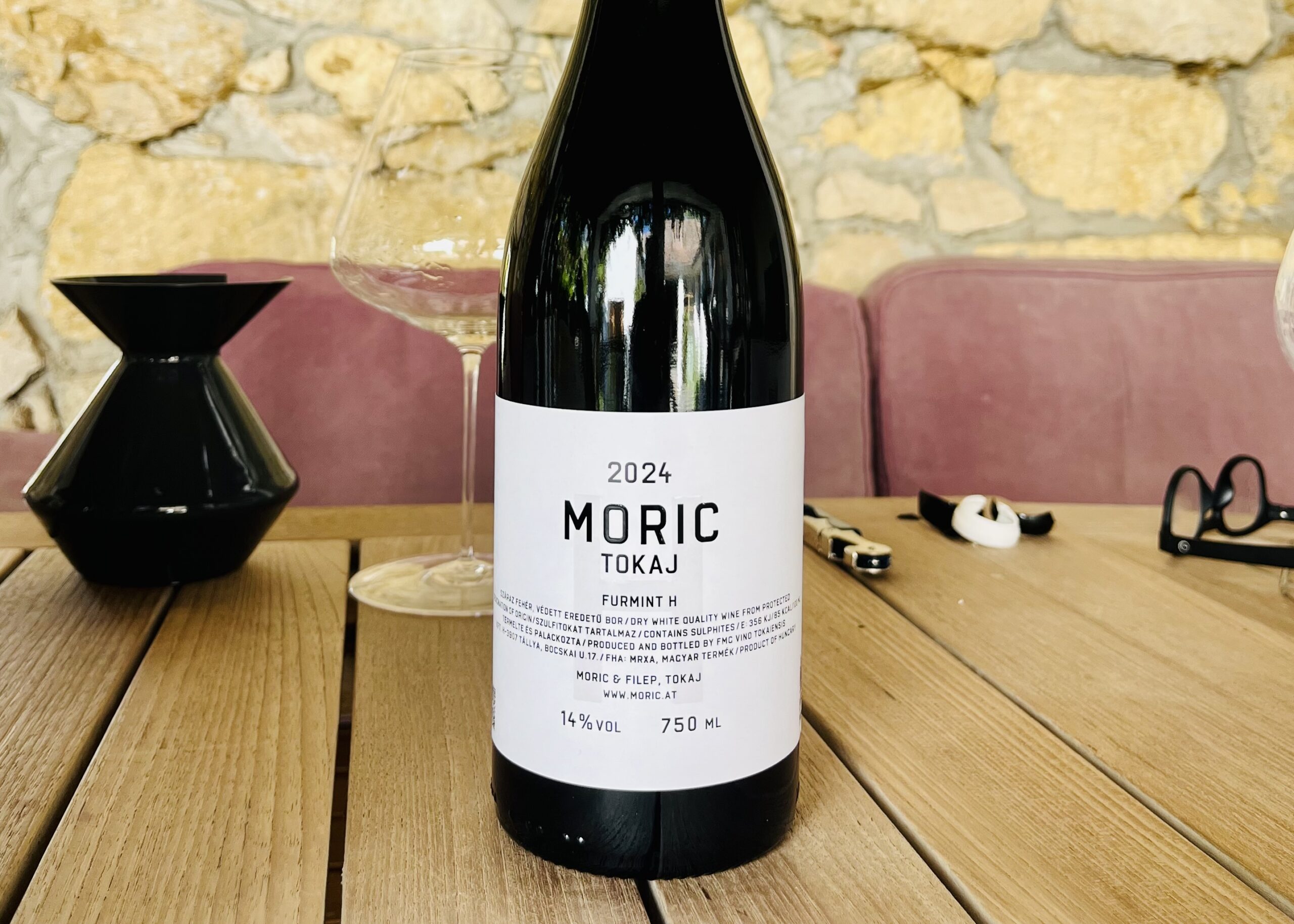
2024 Moric Furmint H RRP $150
H is the third and final wine in our single-vineyard Furmint series, representing Hasznos—a historically classified first-growth vineyard. The name derives from the Hungarian word haszon, meaning “profit” or “fertility”, reflecting the vineyard’s long-standing reputation as an exceptional site. Hasznos first appeared in 1467 in a real estate contract, highlighting its deep historical significance in the region.
Hasznos sits higher than Görbe or Túróska, at 230–260 metres above sea level, with a south-southeast-facing aspect that provides extended sunlight hours while maintaining cooler average temperatures. This balance gives the vineyard its distinctive character, allowing for greater fruit ripeness while preserving acidity and aromatic purity.
The vineyard’s geology is complex and expressive, resting on volcanic bedrock of rhyolite, rhyolite tuff and highly silicified tuff, often marked by hollows—natural cavities formed by volcanic activity. Traces of andesite and quartzite are also found throughout the site. In some areas, coarse rhyolite tuff detritus dominates, while sections of the parcel reveal bare bedrock at the surface, particularly towards the upper slopes. The topsoil is thin and patchy, composed largely of alluvial material washed down from surrounding forested areas and interspersed with stony, barren patches, amplifying the vineyard’s mineral tension and textural depth.
The fruit is gently pressed as whole bunches before undergoing spontaneous fermentation. The wine is aged for six months on full lees, followed by a further six months on fine lees in one 500-litre barrel and a stainless-steel tank. Spontaneous malolactic conversion takes place in barrel. The wine is not fined and undergoes very gentle filtration. No additives are used apart from small amounts of sulphites. All wines are therefore vegan.
The 2024 Furmint H is named after the Hasznos site, which unites quartzite, rhyolite and andesite. Apple peel and linden tisane come with some lovely smokiness. A floral, creamy, smooth edge frames this stony wine, aromatic with lindenflower and gentle, smooth apple. Freshness is pervasive, vivid, lasting, wonderful and totally arresting. (Bone-dry) 94 points. Anne Krebiehl MW, Vinous Nov 2025
